• About The Lewisham Press
  • FAQs
  • Our Writers
  • Our Blog

Lewisham PressAccessible. Affordable. Antiquarian. Amazing.

  • All Books
  • Books by New Authors
  • CrimeThe Crime and Society series publishes important, but largely forgotten works of nonfiction, from the nineteenth and twentieth centuries, with the focus on issues of crime and society. This includes monographs, memoirs, biographies, and guidebooks written by police, lawyers, judges, social workers, campaigners, philanthropists and charity workers.
  • Local & Family History
  • Political & Social Reform
  • War & Military
  • Click to open the search input field Click to open the search input field Search
  • Menu Menu
You are here: Home1 / About the Lewisham Press2 / Our Blog3 / Local History4 / Save the European Wildcat!
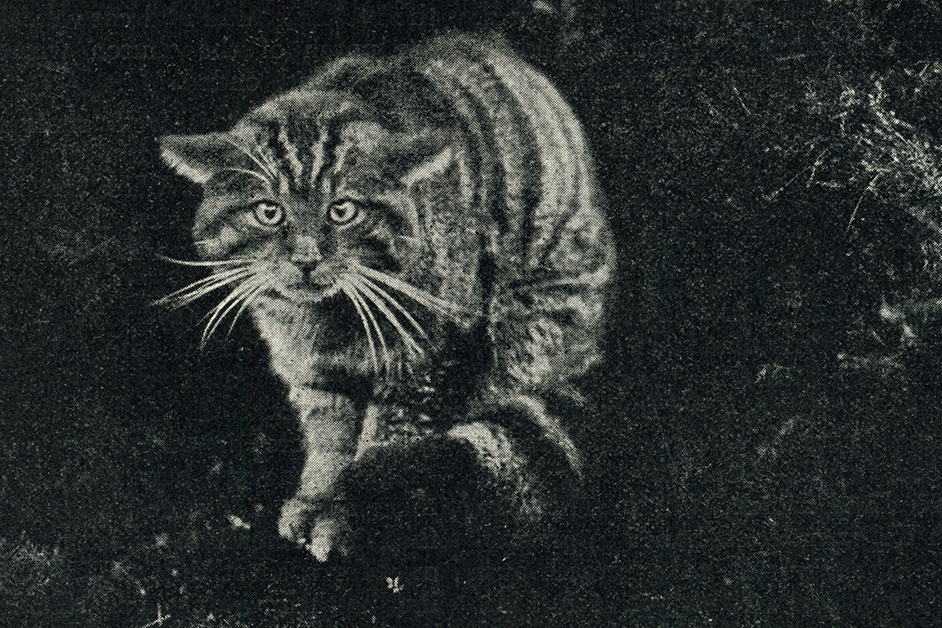
European Wildcat, photo by Charles Reid in Britain's Wonderland of Nature 1934 edited by John R. Crossland & J. M. Parrish.

Save the European Wildcat!

February 1, 2026/in Local History/by David Reeves

Recently we wrote about how Catford was named after a gang of wild cats who populated a ford over the River Ravensbourne. Now we want to share some more information about the European wildcat species!

Wild cats are no longer a feature of the Catford environment, though thankfully Catford today is home to many domestic cat breeds which are related to wild cats.

The European wildcat, or Felis silvestris to give it its scientific name, is a small wildcat species native to Europe. Once present across Britain, the European wildcat is now unfortunately nearly extinct here. Only a small and vulnerable population remains in Scotland. Other countries, such as Germany, have managed to better maintain their European wildcat populations.

Saving Wildcats is an important website to visit to learn more about our small Scottish population of European wildcats. With the right supports, we could save our European wildcat population. It would even be possible to reintroduce the European wildcat to other parts of Britain in the future.

European wildcats favour woodland environments. They are primarily carnivores and typically feed mainly on small mammals such as mice. They are bigger than domestic cats. Their fur is brownish grey with stripes on the forehead and on the sides and a bushy tail with a black tip. Unlike their domestic relations they are untameable. They are well-known for their feisty spirit and love of solitude and night-time.

Tags: Cats, European Wildcats, Scotland
https://lewishampress.com/wp-content/uploads/32wild-cat.png 628 942 David Reeves David Reeves2026-02-01 19:59:162026-11-19 19:30:11Save the European Wildcat!
  • Blog Home

Our blog is where the Lewisham Press team share articles about our passions — Which are everything to do with Books and History (usually local history or family history).

Categories

  • Local History (6)

Archives

  • October 2026 (1)
  • August 2026 (1)
  • June 2026 (1)
  • April 2026 (1)
  • February 2026 (1)
  • December 2025 (1)

Tags

Activists (2) Adelaide Hall (1) Antarctic (1) Battle of Lewisham (1) Black History (2) Black People’s Day of Action (1) Catford (1) Cats (2) Civil Rights (1) Darcus Howe (1) Eleanor Marx (1) Entertainers (1) Ernest Shackleton (1) European Wildcats (2) Explorers (1) Ireland (1) Lewisham Hippodrome (1) Marxism (1) Music (1) New Cross Fire (1) Place Names (1) Policing (2) Racism (1) Scotland (1) Socialism (1) Socialist League (1) Trade Unionism (1) Trinidad (1) World War Two (1)
  • Privacy & Cookies
  • Contact Us
  • Bluesky
  • TikTok
  • YouTube

Categories

  • Local History

Archive

  • October 2026
  • August 2026
  • June 2026
  • April 2026
  • February 2026
  • December 2025
© Copyright - Lewisham Press - Enfold WordPress Theme by Kriesi
  • Privacy & Cookies
  • Contact Us
Scroll to top Scroll to top Scroll to top