According to the A. D. Mills’s A Dictionary of British Place Names, the name Catford can be dated back to 1240 and means ‘Ford frequented by wild cats.’ At that time it was spelt Catteford; a joining of the Old English words Catt and Ford. A. D. Mill’s A Dictionary of London Place Names further notes references to it as Cateford in 1254, Katford in 1278 and Cateforde in 1311.
The European wildcat – Felis silvestris – is a small wildcat species native to Britain and Europe. It is known that wild cats were common in Britain in the Middle Ages, but they went into decline in the Early Modern Era and had practically vanished from England by the Modern Era. They do however survive to this day in small numbers in the highlands of Scotland.
A ford is a shallow crossing of a river or stream and many places in England are named after fords. In the case of Catford the ‘ford’ referred to was over the River Ravensbourne. If the legend is to be believed, and we certainly do believe it, Catford is named over a ford over the River Ravensbourne that was once famed for its high population of wild cats.
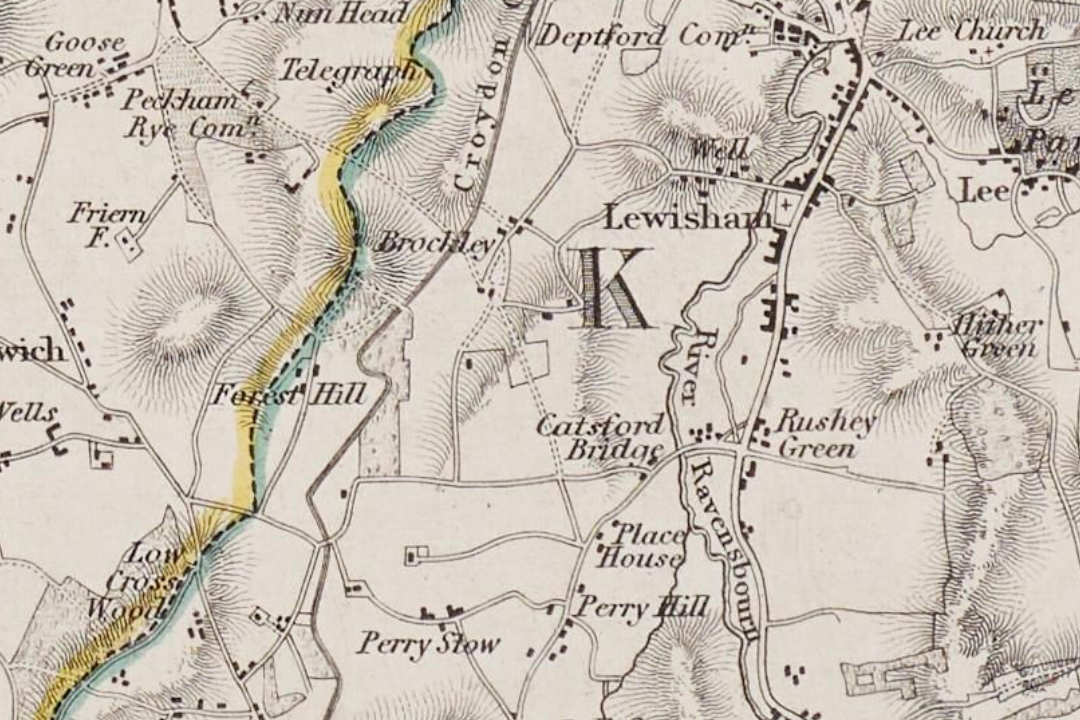
Catford has been spelt in a handful of different ways in the past. Catford Bridge railway station, which opened in 1857, is believed to be the approximate site of where the ford was. Catford was once woodland and before the railway came it was a small rural place. It was often spelt Catsford up until the twentieth century. This is the case on the Ordnance Survey map of 1816 and H. Waters The environs of London map of 1832.
An alternate theory has been put forward online that the ‘cat’ in Catford refers to cattle. We reject this. The most rational reason to do so is that ‘cattle’ is a later Middle English word. The Old English word for cattle was ‘hryther’ or ‘hyth’ and did give its name to other places in Greater London, notably Rotherhithe, which means ‘Landing-place for cattle.’ We also reject the bovine theory because, as people with a deep connection to Catford, we have a strong instinctive feeling that its history is feline. So, unless some startling new evidence emerges, we are committed to the wildcat theory.