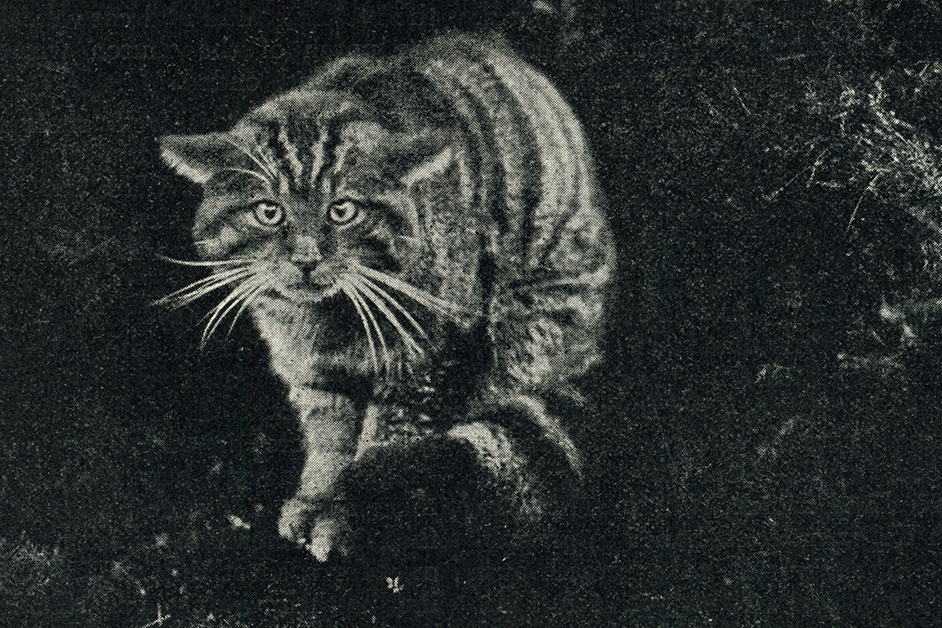
A while ago we wrote about how Catford was named after a gang of wild cats who populated a ford over the River Ravensbourne. This week we want to share some more information about the European wildcat species.
Wild cats are no longer a feature of the Catford environment, though thankfully Catford today is home to many domestic cat breeds which are related to wild cats.
The European wildcat, or Felis silvestris to give it its scientific name, is a small wildcat species native to Europe. Once present across Britain, the European wildcat is now unfortunately nearly extinct here. Only a small and vulnerable population remains in Scotland. Other countries, such as Germany, have managed to better maintain their European wildcat populations.
Saving Wildcats is an important website to visit to learn more about our small Scottish population of European wildcats. With the right supports, we could save our European wildcat population. It would even be possible to reintroduce the European wildcat to other parts of Britain in the future.
European wildcats favour woodland environments. They are primarily carnivores and typically feed mainly on small mammals such as mice. They are bigger than domestic cats. Their fur is brownish grey with stripes on the forehead and on the sides and a bushy tail with a black tip. Unlike their domestic relations they are untameable. They are well-known for their feisty spirit and love of solitude and night-time.